For three decades, Dyna-Fab has operated a decidedly low-tech business stamping out metal parts for rockets, restaurants and more. Now it’s looking to a higher-tech future, powered by an investment in cobot technology.
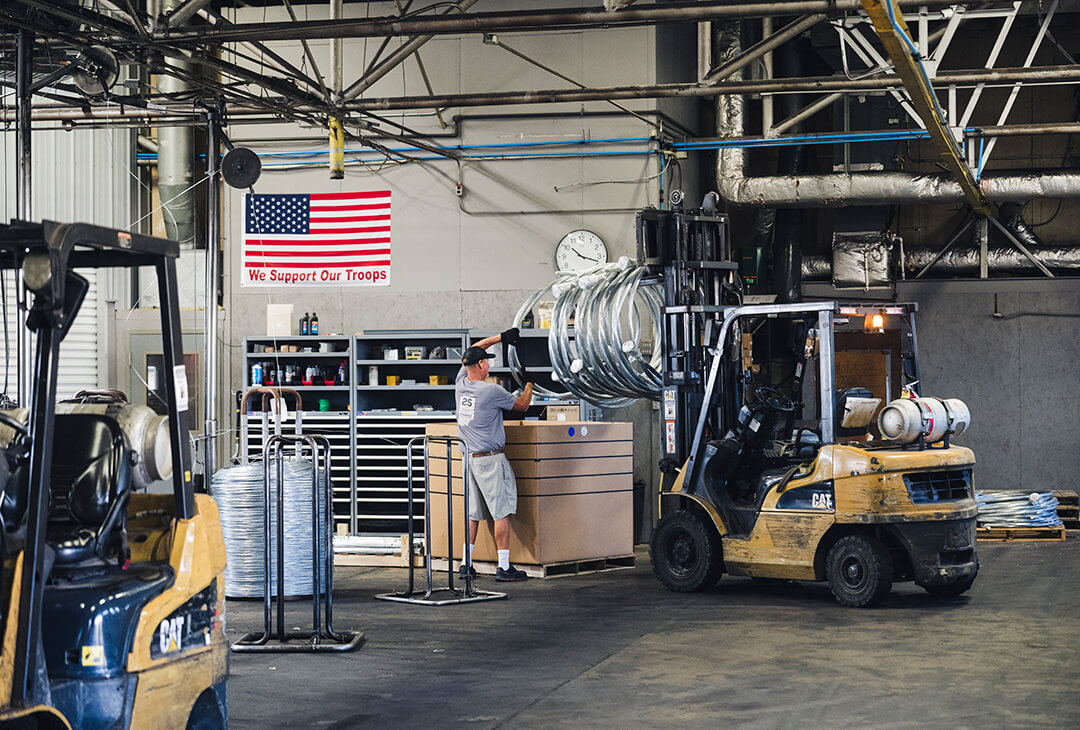
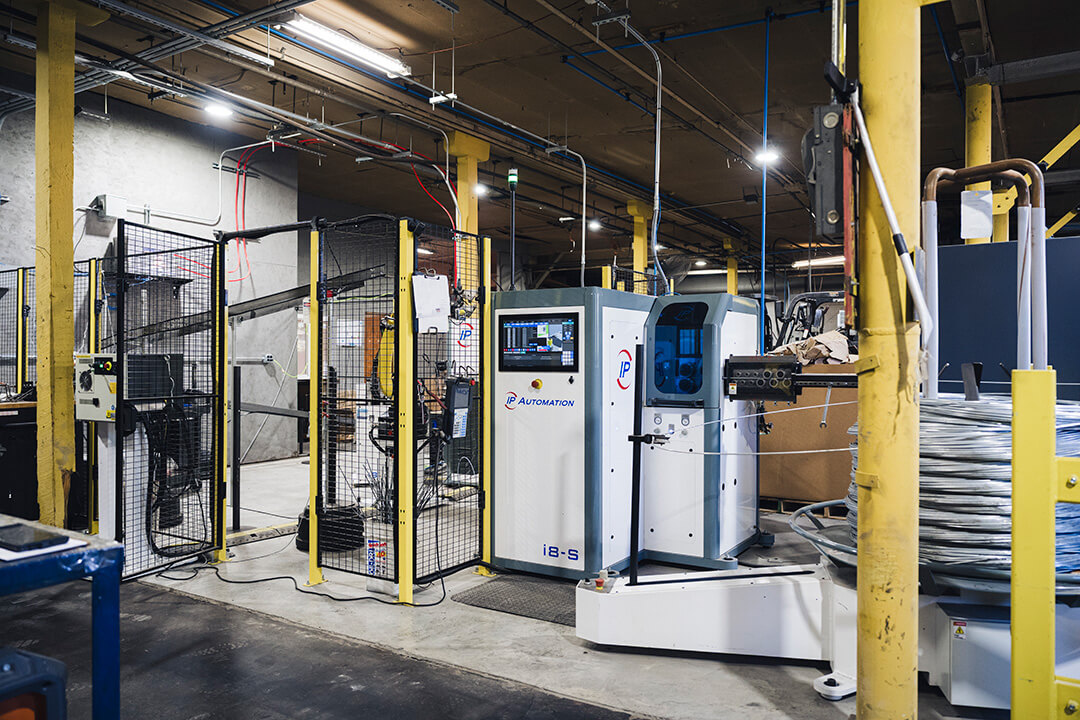
Based in West Lebanon, a tiny Indiana town not far from the Illinois border, Dyna-Fab provides metal fabrication services for customers in a range of industries, from defense to restaurants to parts manufacturing. It operates from a complex with roughly 60,000 square feet for production and storage.
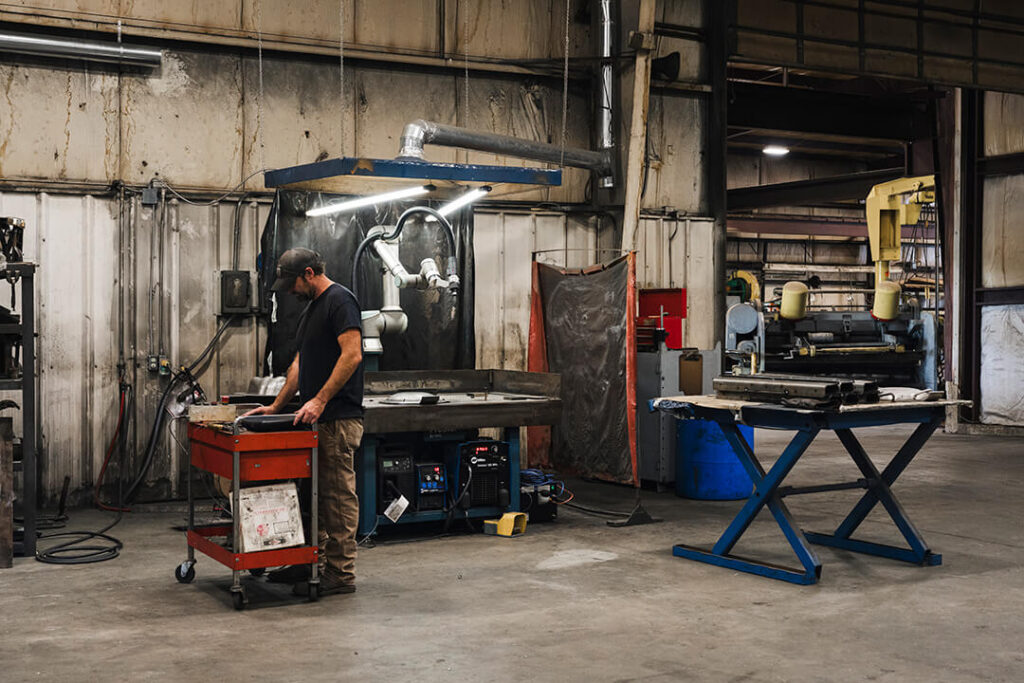
Over the past few years, the company has invested in cobot technology, first for plasma cutting and later adding cobot welding. Scott Rew, President of Dyna-Fab, says making that first move did more than add new capability. It also provided momentum.
Cobot-powered opportunities
Asking themselves, “Is there a better way?” led the Dyna-Fab team to explore cobots and make the move to higher technology.
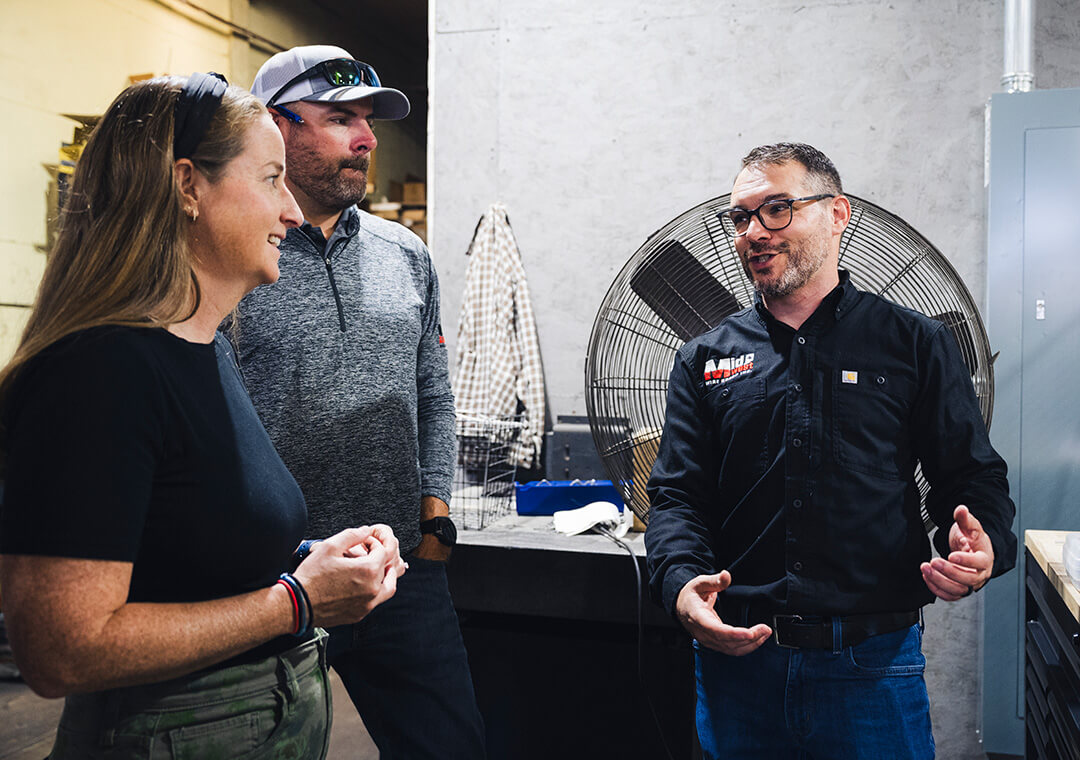
Dyna-Fab’s move toward cobot technology grew from conversations Rew had with Kerri McDowell, Dyna-Fab’s Executive Vice President, about the metal broiler pans the company stamps out for New Haven, Indiana-based Accu-Temp, which supplies equipment to restaurants, schools, healthcare facilities, grocery stores, the military and more.
After being stamped, the pans, which can be nearly four feet long, must be trimmed of excess metal. In the past, Dyna-Fab would trim each pan with a special band saw, a tedious, manual process that could take up to 45 minutes per pan.
“Kerri and I got to talking, and we wondered, ‘Is there a better way of doing this?’” Rew says. That question led them to investigate the plasma-cutting capabilities of cobots. And while they were impressed by the possibilities, the cost of the cobot initially made them consider simply adding a second band saw instead.
With the help of a Manufacturing Readiness Grant, they purchased the cobot and put it to work. The impact was remarkable: The 35- to 45-minute process of trimming the pans was reduced to about 3 minutes, and the team saw the potential for using the cobot for other projects.
“You can run multiple projects through that machine,” McDowell says. “So that was a big, big game-changer.”
The versatility of the cobot really shined through when Dyna-Fab began to work on a project for a start-up firm out of New Jersey. Hatched by firefighters, Turtle Fire Systems LLC had created a special device to combat the challenges presented by electric-vehicle (EV) fires.
To fight such fires, the company points out, responders must be able to direct copious amounts of water at the vehicle’s battery, which is usually located underneath the vehicle and, as a result, virtually impossible to reach safely with standard nozzles. A metal, dome-shaped piece of equipment, the Turtle Fire System can slide under a car or truck and, through a cluster of nozzles, direct more than 500 gallons of water per minute onto the battery case from below.
Ultimately, Turtle Fire Systems believes it can have a strong market in two sizes of its water-deployment system: the portable one that firefighters can slide under a flaming vehicle and an in-ground version that would be installed at EV charging stations and parking locations.
The Turtle Fire System team was looking for a company that could stamp out the metal dome at the heart of its product when they reached out to Dyna-Fab. “We were like, ‘Absolutely, there’s nothing hard about that at all,’” Rew says. “We’ve got some big 500-, 1,000-ton presses. Yeah, we can do that.”
Once they started working together, both Turtle Fire Systems and Dyna-Fab recognized that there was more the Indiana company could do for the firefighters. Soon, Dyna-Fab was supplying technical drawings, welding, helping with overall production, warehousing products and more.
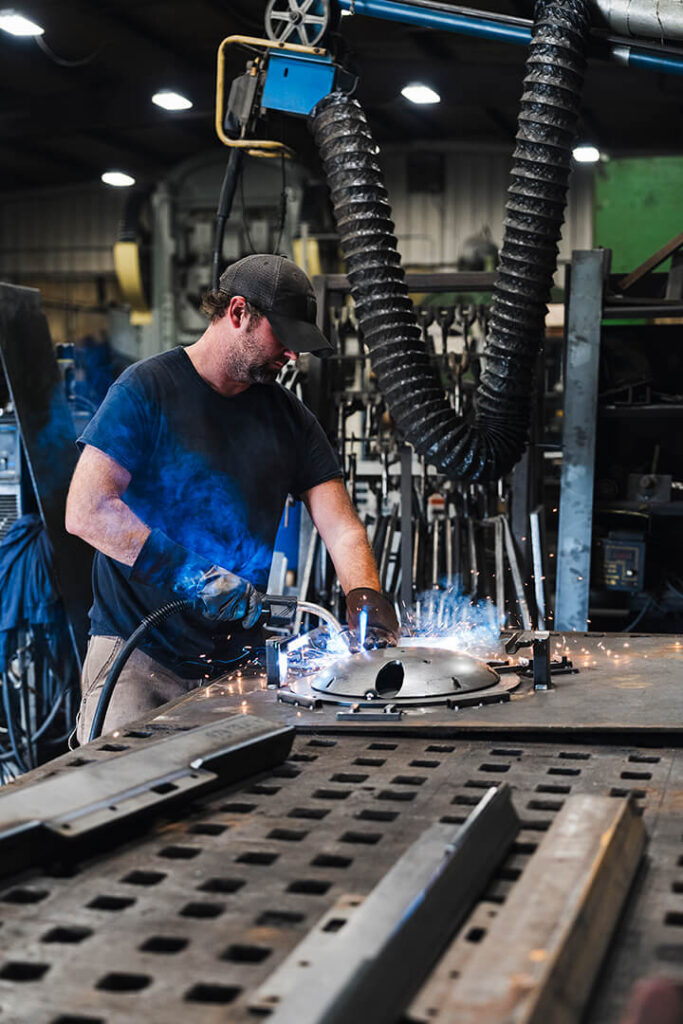
As it was ramping up its engagement with Turtle Fire Systems, the Dyna-Fab team started considering how much it could realistically take on. “If it takes 15, 20 or 25 minutes to do an entire system and you’ve got a backlog of 250 or 300 of these, I could see burning out our welder pretty quickly,” Rew says, and the worker pipeline wasn’t deep enough to simply hire more welders.
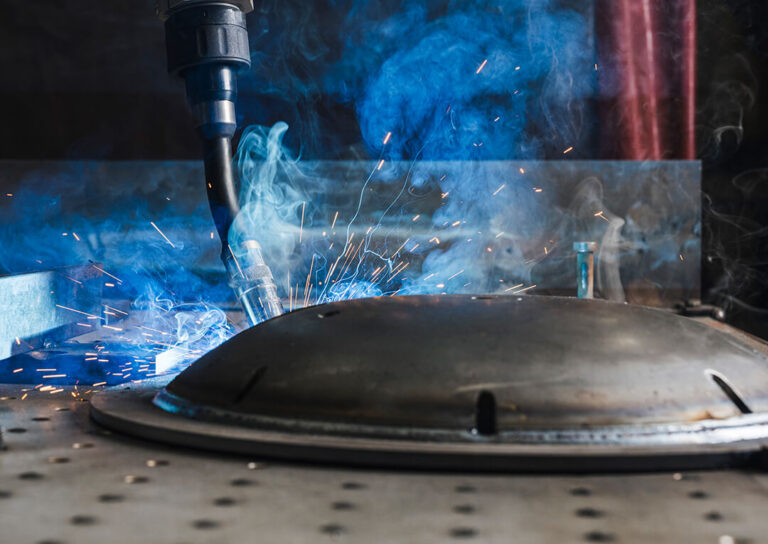
Dyna-Fab began investigating the welding capabilities of the cobot. What they discovered was that they could in fact add welding capabilities to the cobot they’d already purchased. With proper programming and employee training, the cobot reduces the time required to weld the Turtle Fire System by 80%.
And that giant step forward could lead to others. Rew believes Dyna-Fab could take on more with Turtle Fire System, perhaps assembling the complete “turtle,” powder coating it and even serving as a centralized warehouse and distribution facility. “There’s no sense sending 80 lbs. of material to New Jersey to send it somewhere else,” he says.
Meanwhile, the company is exploring other product opportunities and customer projects that make the most of its technology upgrades. “I think it gives us a good opportunity to let other people know that we have this capability and get some new work here,” McDowell says.