When the Data Got Complicated, Yamaha Marine Turned to the Classroom

Yamaha Marine Precision Propellers, Inc.

Greenfield, Indiana

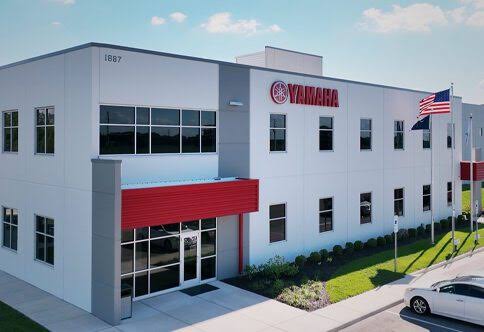
When Yamaha Marine Precision Propellers opened its new, fully automated foundry in Greenfield in 2021, the goal was straightforward: modernize a 1970s-era metal casting process and protect the company’s most valuable investment: its people. The new facility’s robotics and vision systems were built to improve safety and consistency in propeller casting.

“Automation was never about reducing headcount,” said Batuhan Ak, general manager at Yamaha Marine Precision Propellers (YPPI). “We actually gained headcount with this facility. It was about safety, efficiency and giving our people the tools to do their jobs better.”

But soon after “flipping the switch,” YPPI ran into a problem no one had planned for. The company’s scrap rate — the percentage of defective parts — climbed from 2% to more than 15%.

“We thought we took the human variable out of the equation,” Ak said. “But we didn’t account for the new variables created by automation.”

Following are highlights of how YPPI solved the problem and what other manufacturers can learn from it:

  • Data alone isn’t the answer. YPPI’s automated foundry generated vast amounts of sensor and machine data, but the company had no in-house data science expertise to make sense of it and the new robotic pouring process behaved in ways their traditional process parameters didn’t anticipate or catch.
  • Know when to look outside your own walls. Ak and his team explored outside vendors to help solve the problem, but the quotes far exceeded the budget of YPPI, a 160-person company. Rather than shelve the project, they looked for a different kind of partner.
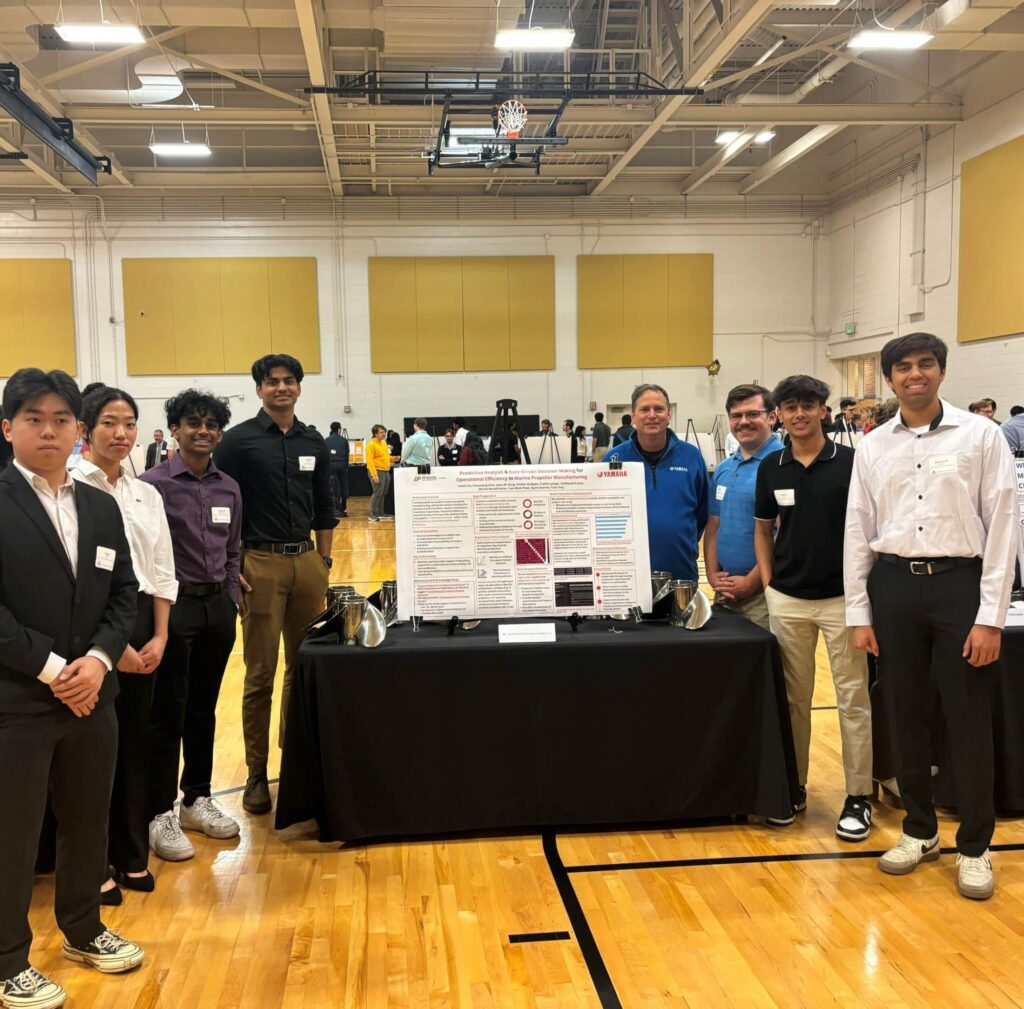
  • Partner with education to close the gap. YPPI turned to Purdue University’s Data Mine, a student-driven research and analytics program that connects Indiana companies with cross-disciplinary teams of data science and engineering students. For a modest $10,000 per semester, Yamaha and the Data Mine launched a two-year collaboration to build machine learning models that could predict scrap before it occurred.
  • Expect the first version to fall short and keep refining. “In the first year, our model had about 40% predictive accuracy,” Ak said. “But by cleaning and refining the data with Purdue’s team, we reached 94% predictive accuracy in detecting defects.” That leap translated directly into production gains: YPPI’s scrap rate dropped from more than 15% to less than 1%, saving the company more than $1 million annually.
  • Treat clean data as the real deliverable. “The cleanliness of the data was the most important lesson we learned,” Ak said. “And there has to be a functional understanding of the business in order to vet both the process during AI development and the AI’s output.” Engineers who understood the casting process stayed closely involved throughout, translating what the models found into changes on the floor.
"From a cost-savings standpoint, it's been astronomical. We're saving more than $1 million a year that used to go straight into scrap. This is the kind of return most small and mid-sized manufacturers can't afford to leave on the table."
Batuhan Ak
General Manager, Yamaha Marine Precision Propellers

YPPI’s total investment in the project — about $40,000 over two years — has returned millions in savings and safeguarded the future of its state-of-the-art facility. The company is now expanding its business, offering casting services to other manufacturers who need the same level of precision and quality it achieved through AI.

“I would be hard-pressed to think of any small or medium-sized business that wouldn’t benefit from some form of AI,” Ak said. “It’s even more valuable for companies our size.”

Yamaha Marine Precision Propellers

Yamaha Marine Precision Propellers, Inc. (YPPI), headquartered in Greenfield, Indiana, manufactures precision boat propellers for Yamaha Marine and other customers. In 2021, the 160-person company opened a fully automated foundry incorporating robotics and vision systems to modernize its metal-casting process. YPPI has since partnered with Purdue University’s Data Mine program to apply machine learning to quality control, and is now expanding into contract casting services for other manufacturers.