
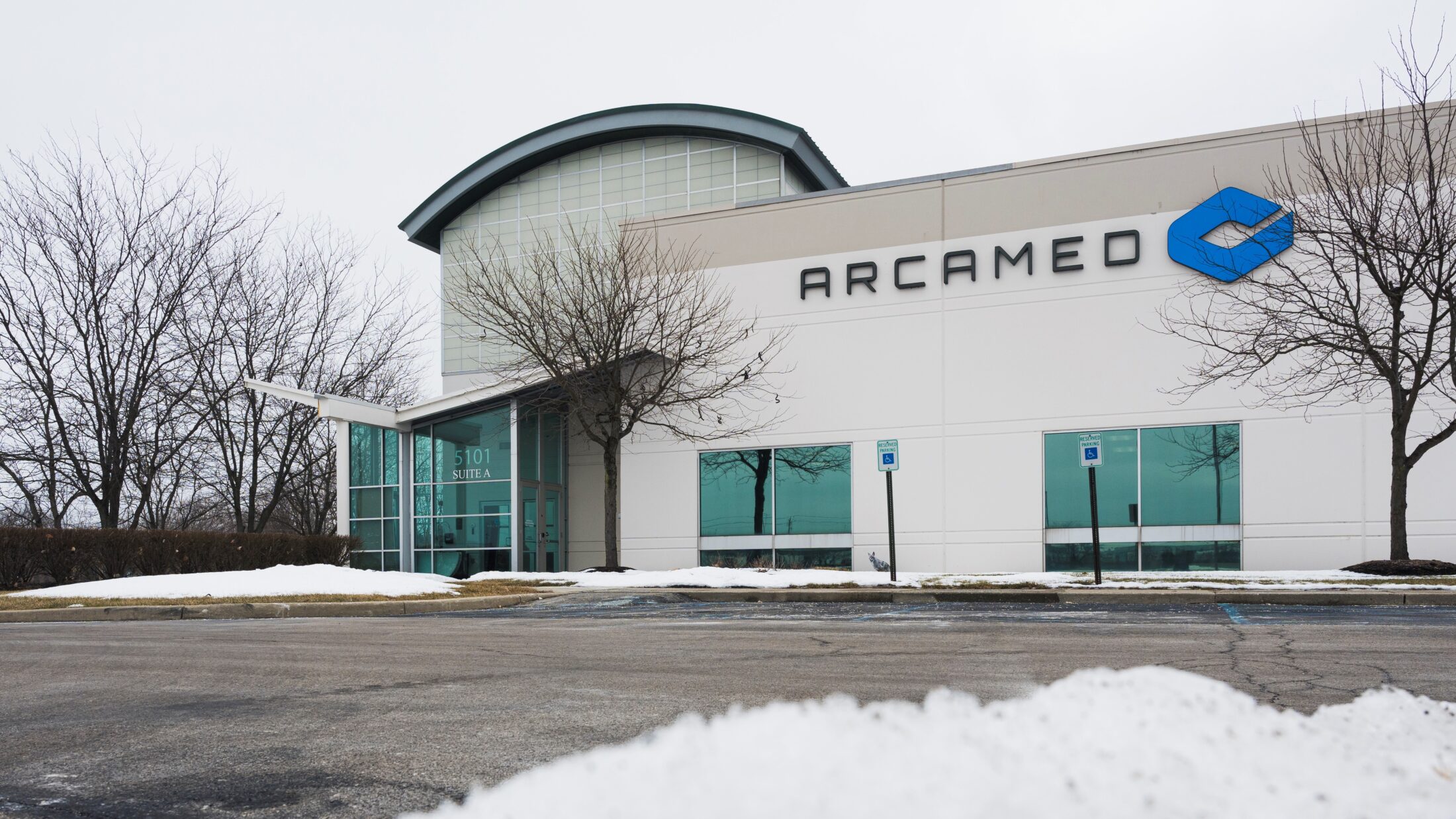
Since 2012, Indianapolis-based Arcamed has been designing and manufacturing surgical case and tray systems. For nearly a decade, under the leadership of CEO Jon Desalvo, the company also has maintained an active apprenticeship program. Currently Arcamed’s workforce of 85 includes 10 apprentices. Over the years, some 40 high school students have worked and learned as Arcamed apprentices and, adding students working toward associate degrees and 4-year college degrees, Jon estimates that number grows to 70 or 80 apprentices.
With his experience and enthusiasm for the Arcamed apprenticeship program, it’s no surprise that Jon is actively involved in a statewide effort to transform how students and adults prepare for high-demand careers in AML. As chair of the AML Industry Talent Association (ITA) that Conexus Indiana leads, Jon works alongside fellow employers to help define the skills and competencies students need, co-create curriculum and ensure training aligns with real workforce needs.
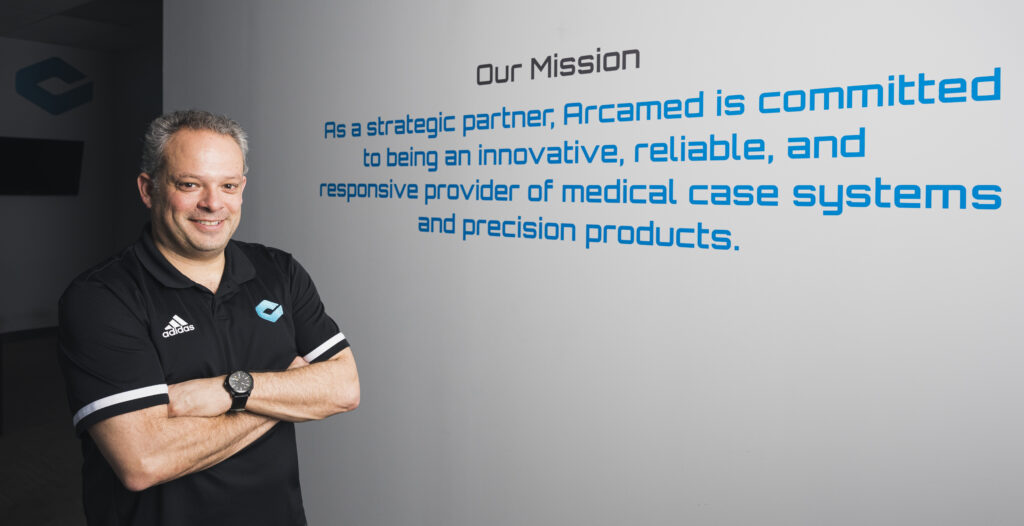
From that vantage point, Jon believes that not enough companies are teaching students and their parents about what manufacturing companies in Indiana can offer. “With more than 9,500 manufacturing companies in Indiana, that’s our bread and butter. That’s what we do,” he said. And he’s happy to share some of the lessons he’s learned as Arcamed developed its apprenticeship program:
- Start with “Can” rather than “Can’t” — “There are so many fabricated barriers. Our mission became ‘We’re going to say we can and figure out a way.’”
- Develop an onboarding program that helps apprentices succeed from the first day. — “Think about onboarding at a high school level. Showing where the restrooms are, clocking in and out. Our quality manager made a video explaining what his job is and what concerns they should bring to him. Think about all the how-to things and close all those little pockets of information a new hire needs to know.”
- Make ‘show up skills’ the first lesson. — “’You have to show up every day committed, because we are committed to you. You’re going to have a voice. This is what is expected of you when you come through that door. You are not an apprentice or a journeyman or a student. You are an employee.’ Explain what is expected every single day: your company values, accountability, communication, attitude.”
- The learning goes both ways. — “A lot of times we put age limits on things that aren’t deserving. For instance, in the age of new technology, you may hear a student educating the mentor: ‘Why don’t you put that in AI? Here’s what it will give you.’ And then they show them. The learning goes both ways and that’s the beauty our organization has really embraced.”
- Your apprenticeship program is a philanthropic community partnership. — “It’s hard to find good people, and it’s hard for students to find ways to learn skills needed to achieve good jobs. If we’re not hiring, learning and teaching, how are we going to create outstanding people in AML? For me, there is no greater satisfaction than seeing a student using Arcamed as the launching pad for their career. “
- Top leadership must be committed to see your program succeed. — “If they’re not, it’s a battle you can’t win. There’s no secret recipe that makes this work. It’s not a one-size-fits-all, and you will fail in some instances. You learn from your failures and create different processes.”
It’s gratifying for Jon to see how invested the Arcamed workforce has become in training and mentoring the young apprentices. and to see the bonds that have been forged between apprentices, mentors and the company — the way they stay in touch with former mentors after an apprenticeship ends, for instance.
Mentors have learned a great deal from their apprentices, too, and Jon believes that effect will be reflected in your own program. “You will be blown away at how much these kids know and the work ethic they come with when it’s something they want,” he said. “This generation of high school students are getting fulfillment from working. It is amazing the immediate value and impact they have on the company. It really is.”
About the Indiana Career Apprenticeship Pathway (INCAP)
The Richard M. Fairbanks Foundation provided grant funding beginning with the Modern Youth Apprenticeship pilot in 2020 and has continued investing in workforce innovation through iLab Indiana — a coalition of 300+ state business, education, nonprofit and government leaders committed to reimagining career learning and training.
Through that coalition, Indiana leaders designed and are now building the Indiana Career Apprenticeship Pathway (INCAP), an employer-led, Swiss-inspired apprenticeship system that blends classroom learning with paid, on-the-job training starting in high school and extending into adult career advancement. INCAP partners with employers through Industry Talent Associations (ITAs) to help define the skills and competencies students need, co-create curriculum and ensure training aligns with real workforce needs. The Fairbanks Foundation continues to support creation of ITAs, regional implementation infrastructure, student recruitment and employer engagement — all aimed at building scalable and sustainable pathways so Indiana can rain, retain and grow talent at scale.