
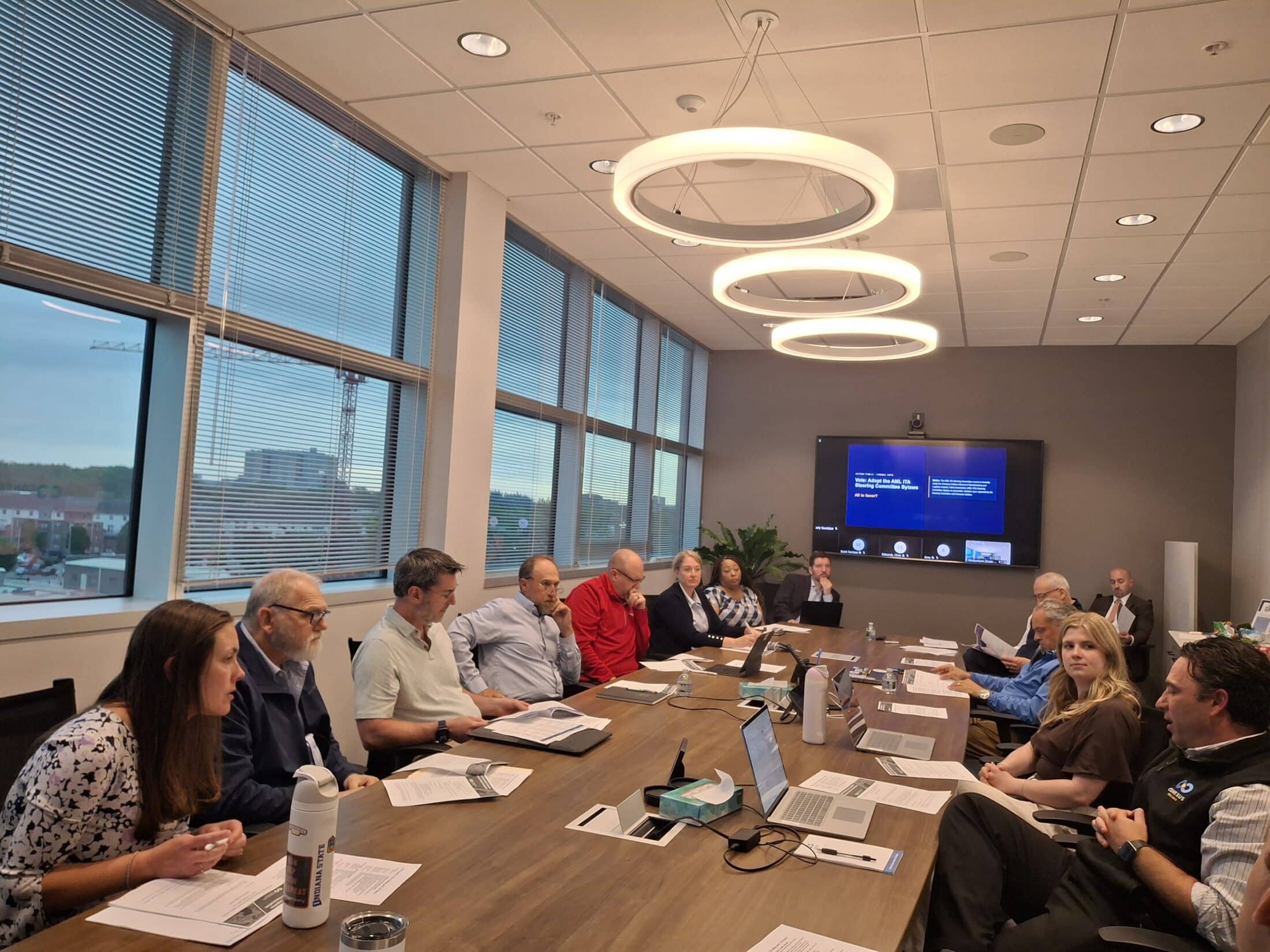
A year ago, Conexus Indiana was selected by Indiana manufacturers to lead the Advanced Manufacturing and Logistics Industry Talent Association (AML ITA), marking the beginning of a different approach to manufacturing talent development in Indiana. Rather than asking employers to advise education and workforce partners, the AML ITA gives them a direct role in defining the competencies those systems align to.
Launched in April 2025, the AML ITA established Indiana’s employer-led structure for occupational standards development, work-based learning design, and pathway alignment in advanced manufacturing and logistics. As the AML ITA marks its first anniversary, year one is worth celebrating not simply because a new pathway was developed, but because manufacturers, educators, and workforce partners built the foundation of a new talent development model together.
Starting with the standard, not the program
The AML ITA was built on a simple idea: the people who hire, supervise, and develop technicians should help define what workforce readiness means.
That is why the ITA’s first major priority was not launching a program. It was developing the Polymechanic / Advanced Manufacturing Technician occupational standard — Indiana’s first employer-defined competency framework for a modern, multi-skilled manufacturing technician role. Participating employers came together to identify the foundational technical and professional competencies required in today’s advanced manufacturing environments, reviewed tasks, validated expectations, and shaped a shared framework that reflects how modern manufacturing systems actually operate.
The resulting standard spans the integrated skill sets increasingly required across Indiana’s manufacturing sector — machining, CNC, quality systems, troubleshooting, automation, robotics, electrical systems, and continuous improvement — and establishes a common foundation that can align multiple delivery models, from high school CTE to dual credit, short-term training, and structured work-based learning.
From occupational standard to learner opportunity
The occupational standard is the foundation. Delivery comes next.
Over the past year, the AML ITA and its partners translated that standard into real implementation opportunities for students and employers, including:
- Alignment to existing and emerging high school CTE content,
- Dual-credit opportunities through postsecondary partners such as Ivy Tech
- Employer-hosted work-based learning experiences
- A three-year Polymechanic / Advanced Manufacturing Technician apprenticeship pathway designed to blend classroom learning, lab experiences, and structured on-the-job training
The apprenticeship pathway is one of several mechanisms for getting employer-defined content in front of students — not the end goal. The value of the AML ITA model is that the underlying employer-defined standard remains consistent even as delivery methods vary.
A first year focused on building, not just planning
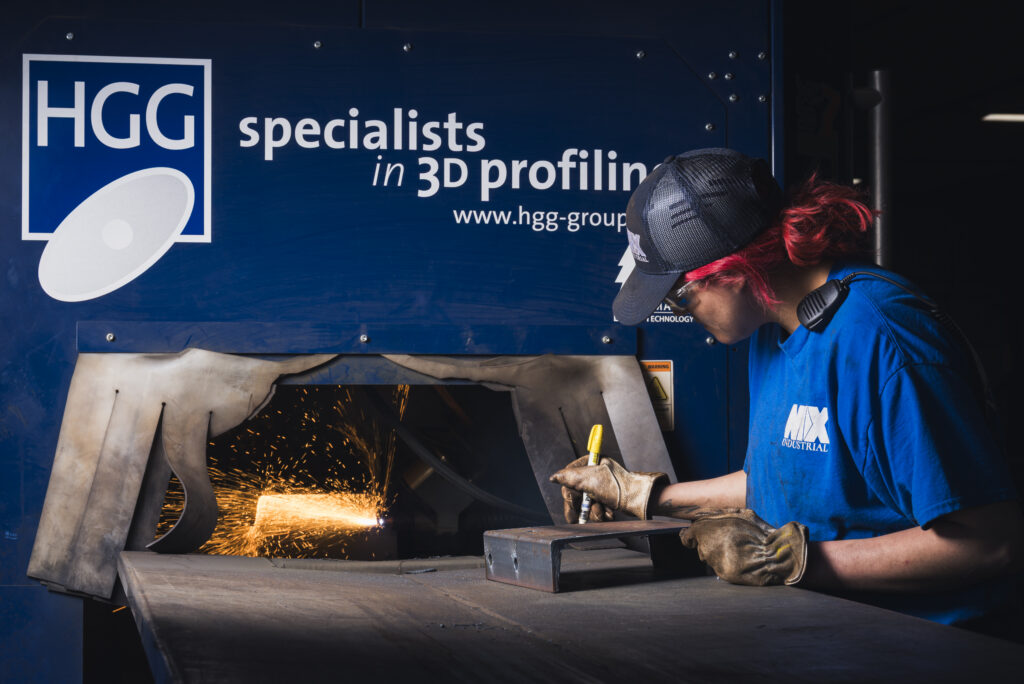
The AML ITA did not spend its first year in abstract planning sessions. Employer members met regularly to validate competencies, review progression across the pathway, identify implementation barriers, and shape tools that make employer participation more practical — including training plan development, employer readiness tools, mentor supports, competency documentation structures, and youth compliance resources.
Just as important, year one demonstrated that employers are willing to lead when the structure is right.
“I entered this work somewhat skeptical of what the AML ITA member employers might want to build at the onset,” said PJ McGrew, Senior Vice President of Talent Strategy and Programming at Conexus Indiana. “Because of the constant need, I thought we would focus on production roles in our initial design phase. However, at our first meeting, the employers involved in the ITA wanted to ensure that high school students were not simply provided with opportunities aligned to a specific job role in production but were learning skills that were directly applicable to finding a career in manufacturing.”
What makes the AML ITA different
The AML ITA gives manufacturers a shared structure to define occupational expectations, guide pathway development, and help shape how education and workforce systems respond to changing industry needs — moving employers from advisory input to shared ownership of the underlying competency framework.
Jon DeSalvo, CEO of Indianapolis-based Arcamed and chair of the AML ITA, has seen this challenge firsthand. Arcamed has operated an active apprenticeship model for years, and he understands both the value of structured training and the barriers many manufacturers face in building it alone.
“There are so many fabricated barriers,” DeSalvo said. “Our mission became, ‘We’re going to say we can and figure out a way.'”
That spirit reflects what the AML ITA is designed to do at scale: reduce fragmentation, create shared structure, and make employer-led talent development more accessible across the sector.
Year one milestones
In its first year, the AML ITA:
- Formally launched Indiana’s employer-led structure for AML occupational standards development and pathway alignment
- Developed and ratified the Polymechanic / Advanced Manufacturing Technician occupational standard as the first employer-defined framework for a modern multi-skilled technician role
- Translated that standard into a three-year training pathway supported by classroom, lab, and workplace learning
- Developed implementation resources to support employers, educators, and workforce partners
- Established an employer steering committee structure to guide governance and ongoing pathway development
- Began planning for expansion into additional occupational areas, including Robotics & Automation, Microelectronics/Advanced Electronics, and Supply Chain & Logistics.
These are meaningful accomplishments on their own. But their larger significance is what they represent: the first proof point that Indiana manufacturers can come together to define shared occupational standards and build aligned delivery models around them.
What comes next
If year one was about building the foundation, year two is about expanding access and scale. The AML ITA’s next phase will focus on growing employer participation, increasing awareness among schools and communities, and creating more opportunities for learners to access employer-defined content — through deeper CTE alignment, broader implementation support, and continued development of work-based learning and apprenticeship opportunities.
At the same time, the ITA is preparing to apply the same employer-led process to additional occupations. The long-term goal is a statewide talent system in which employers define priority occupational standards and education and workforce partners align delivery accordingly — giving smaller and mid-sized manufacturers a way to participate in structured talent development without building everything themselves, and giving students and educators clearer signals about what industry actually needs.
The work belongs to all of us
None of what the AML ITA accomplished in its first year was built by a single organization acting alone. It was built by employers willing to define a shared standard, education partners willing to align around it, and workforce organizations willing to help turn strategy into practice.
The AML ITA is not just creating one more manufacturing pathway. It is helping Indiana test a better way to organize talent development around employer leadership, shared standards, and aligned delivery. The standards being developed today will shape the programs, pathways, and talent pipelines of tomorrow — and every Indiana manufacturer has a role in shaping them.
Ready to learn more?
Connect with Conexus Indiana to learn how your company can engage with the AML Industry Talent Association, support the Polymechanic / Advanced Manufacturing Technician pathway, or help shape the next generation of employer-defined occupational standards in Indiana by reaching out to Jeremy Eltz at [email protected].